
De-risking remote collaboration for Hitachi’s industrial network.
First steps towards a future remote network.
In response to the pandemic, Hitachi aimed to enhance its operational resilience through a more connected infrastructure. The R&D team’s challenge was to bridge the gap between factory floors and remote stakeholders (engineers, technicians, and managers) by harnessing state-of-the-art technology and their existing software infrastructure and security protocols.
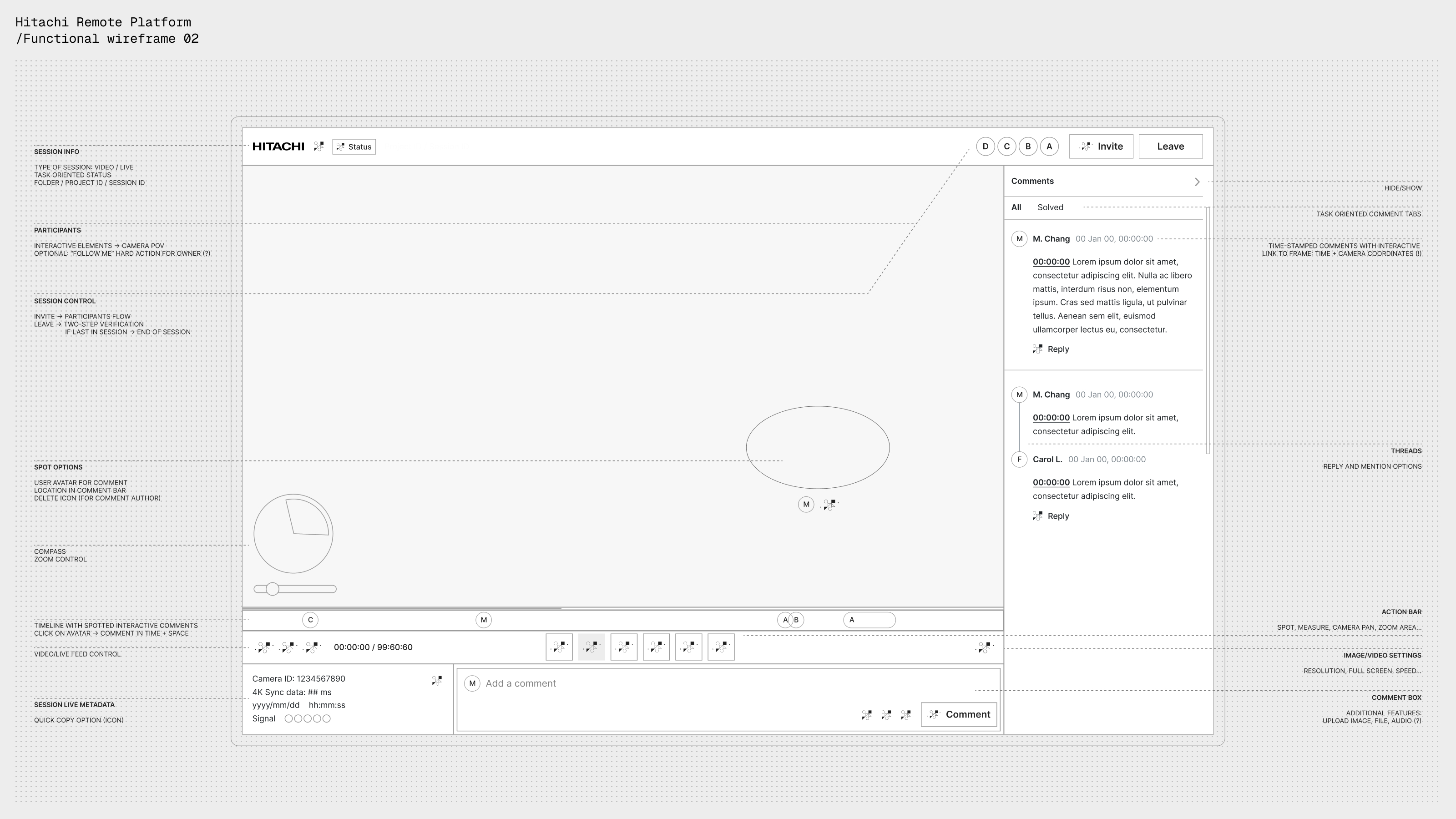
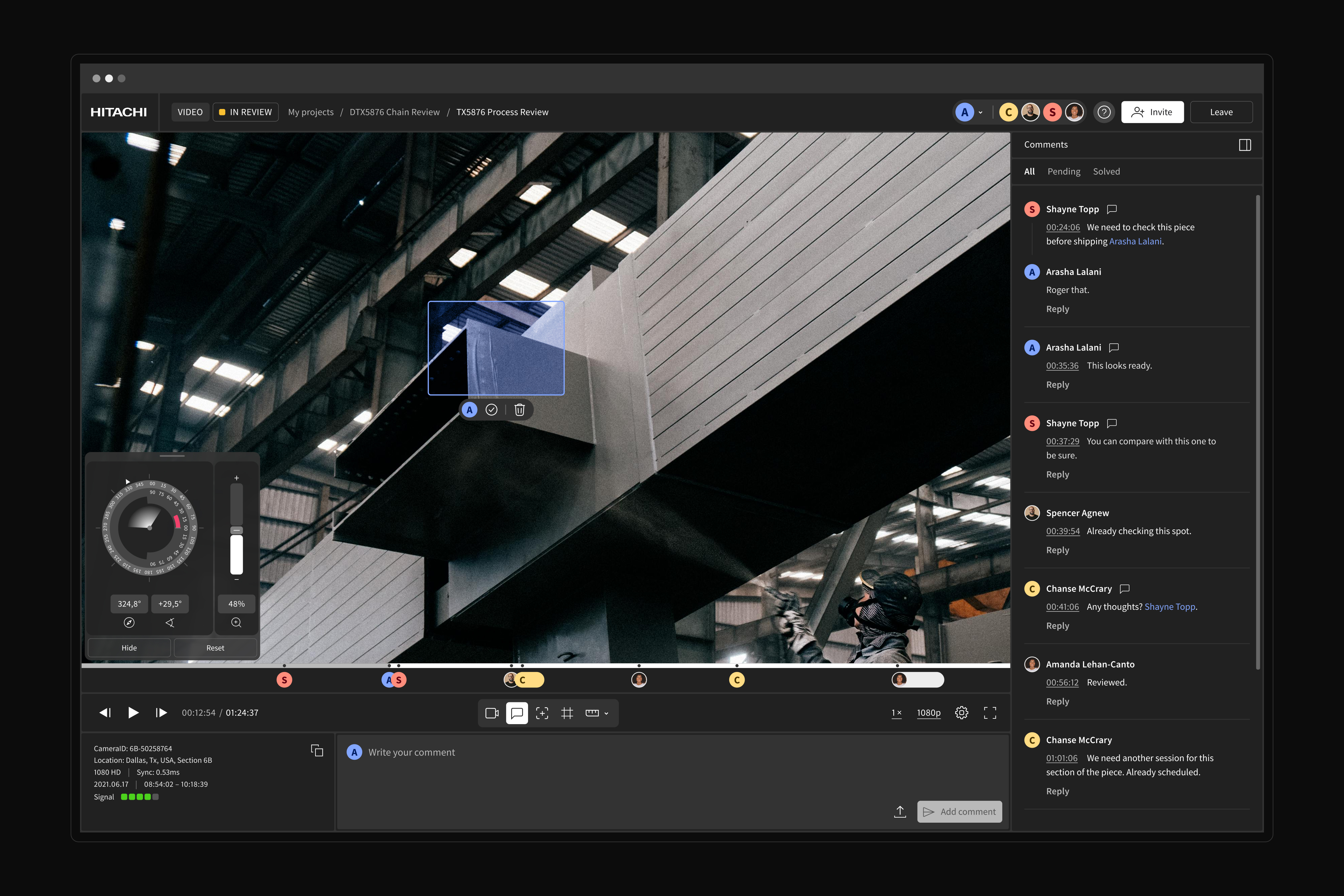
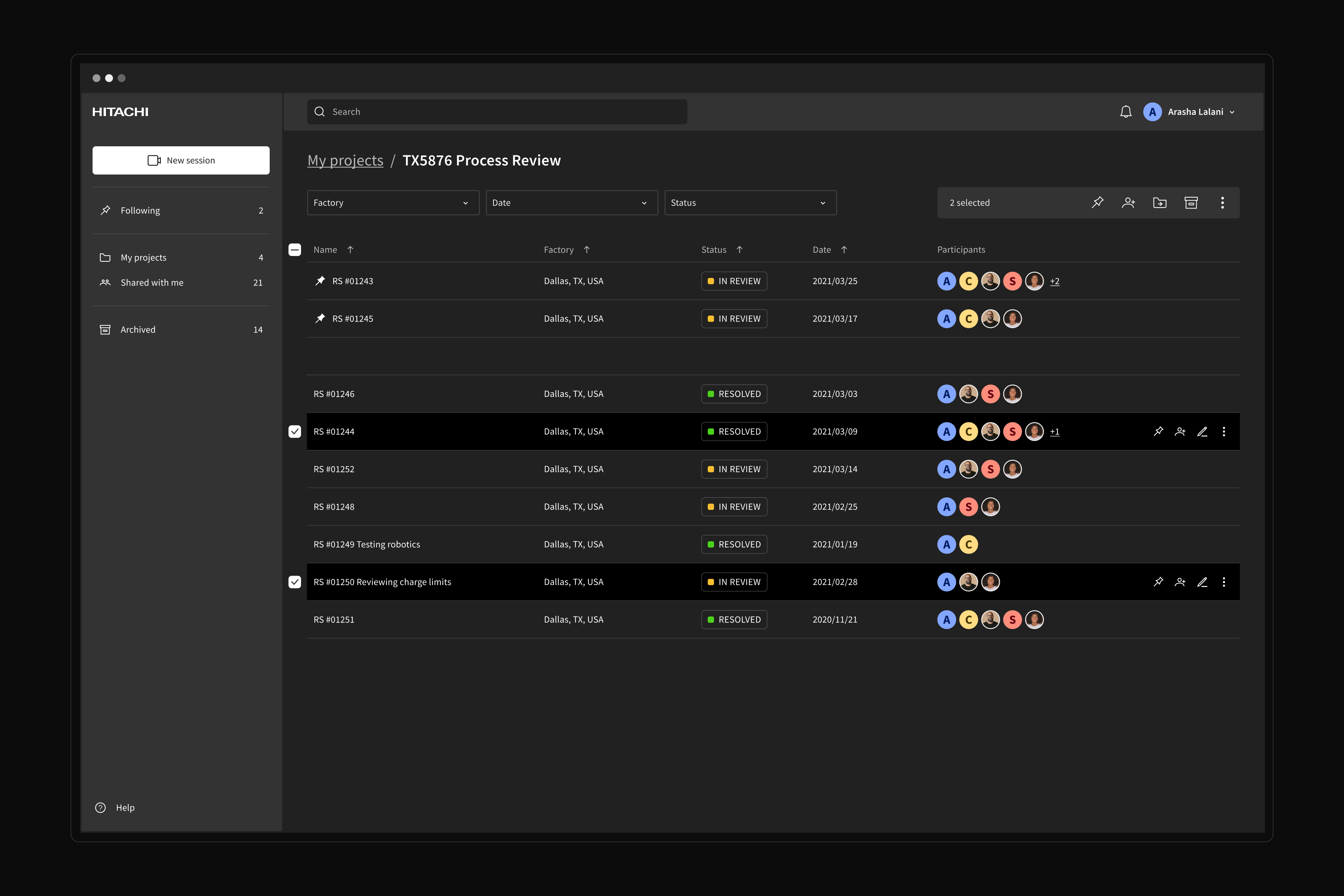
I orchestrated the conceptualization for Hitachi’s R&D, translating complex insights into a PoC. Through interviews, prioritization and definition workshops featuring live-sketching, I established the product architecture and delivered a glimplse into a collaboration tool—bridging functional wireframes with high-fidelity visuals—to align stakeholders and demonstrate business value.
Investment catalyst: The resulting PoC and documentation served as the business case that triggered Hitachi’s full-scale dedicated program.
MVP scope and requirement mapping: Identified the core functional and technical requirements needed to transition from a high-level vision to a buildable platform.
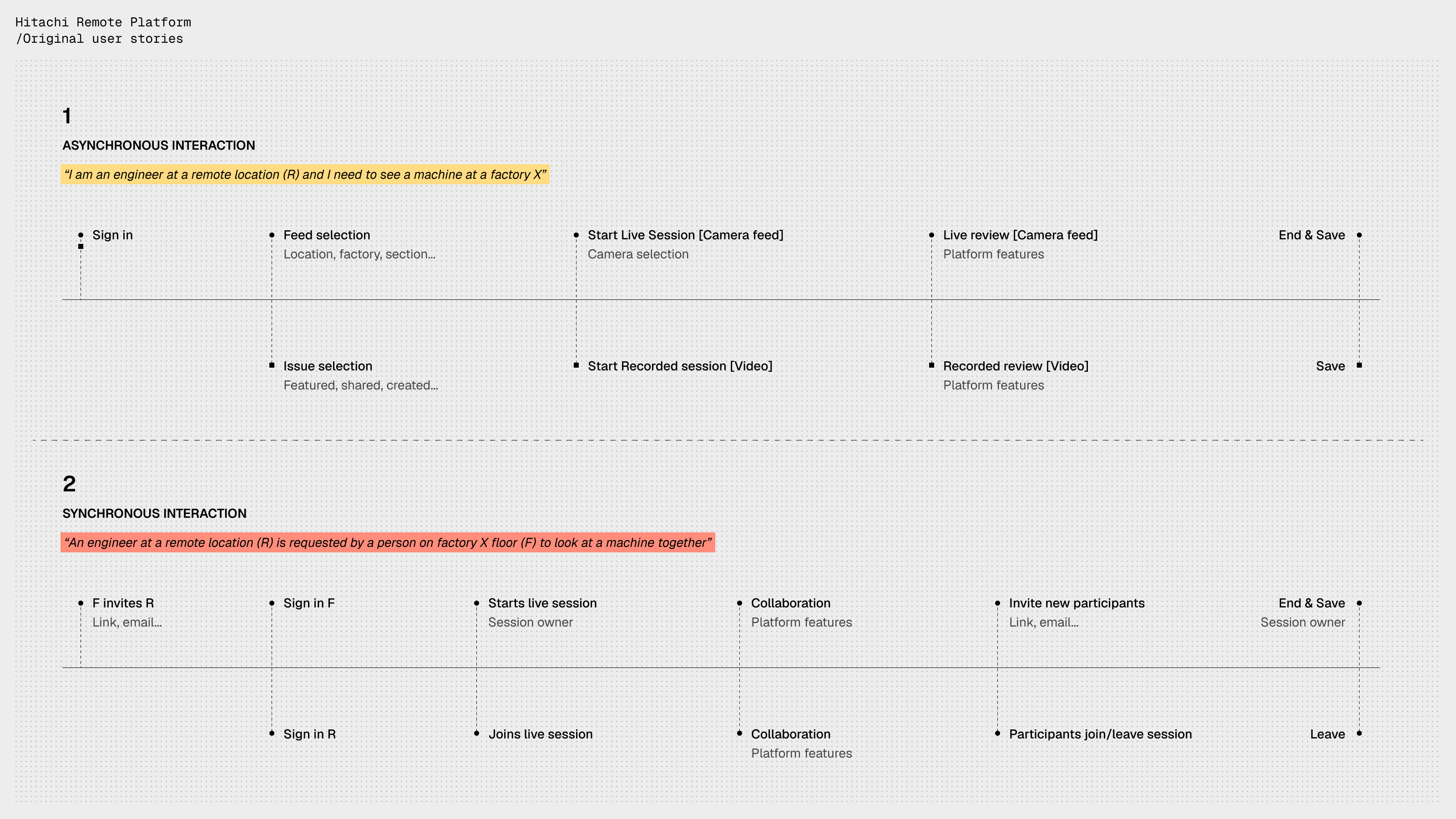
Balancing inmediate fixes with future vision.
Faced with the urgent need to bridge the gap between on-site technicians and remote management during the pandemic, Hitachi’s R&D team sought to reinvent their collaborative tools using existing internal resources. The goal was twofold: address immediate friction and build a scalable foundation for the future.
To test the viability of this approach, we moved quickly into collaborative sketching and ideation sessions. These visual discussions were pivotal, enabling stakeholders, engineers and developers to align on technical constraints and opportunities, resulting in a defined scope for a strategic MVP.
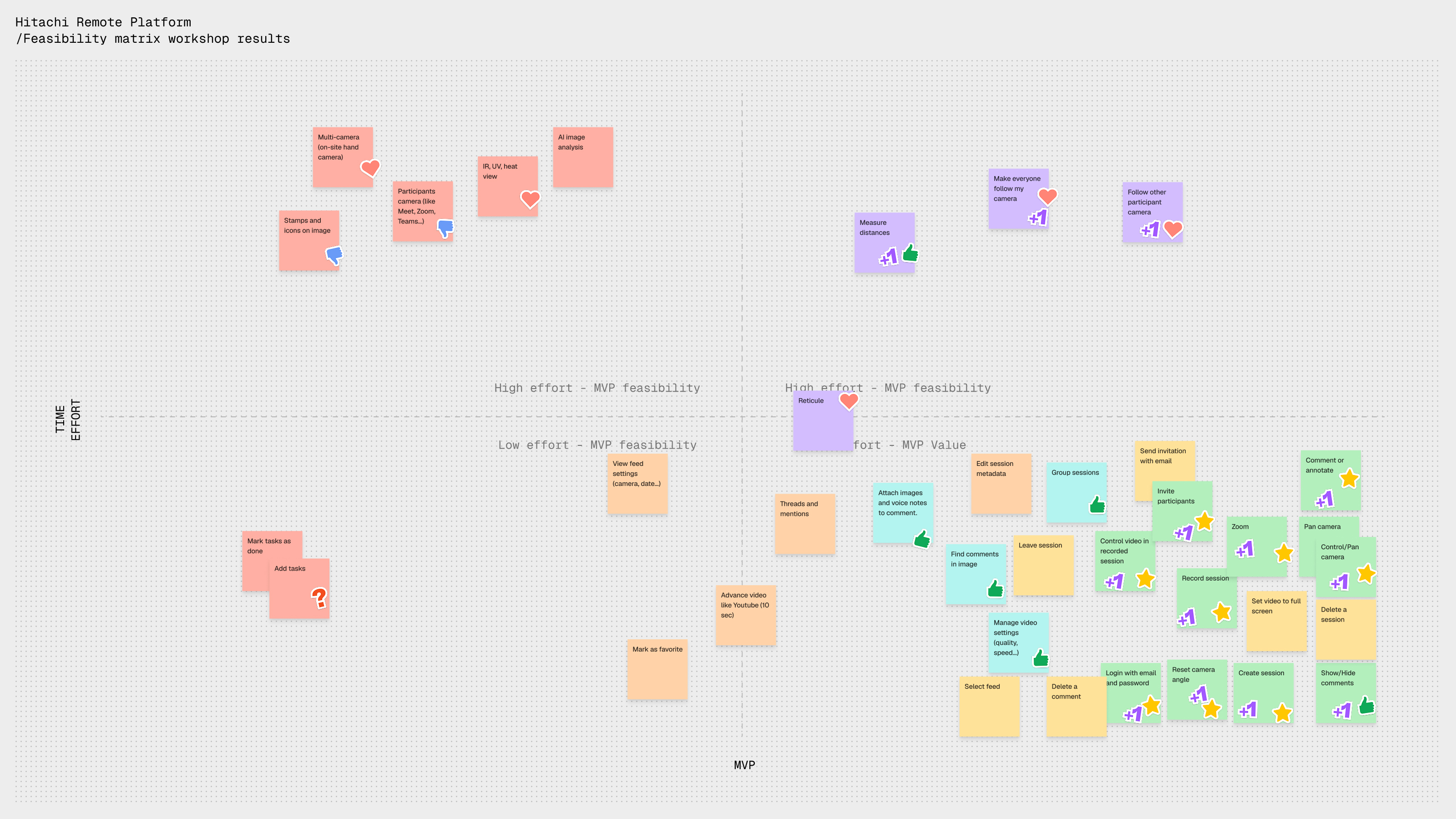
Defining the concept through live prototyping.
We prioritized collaborative live sketching sessions which significantly accelerated the process. This facilitated rapid and unified decision-making regarding scope, functionalities, restrictions and viability parameters, allowing us to quickly establish a strong foundation before diving into more detailed wireframes.
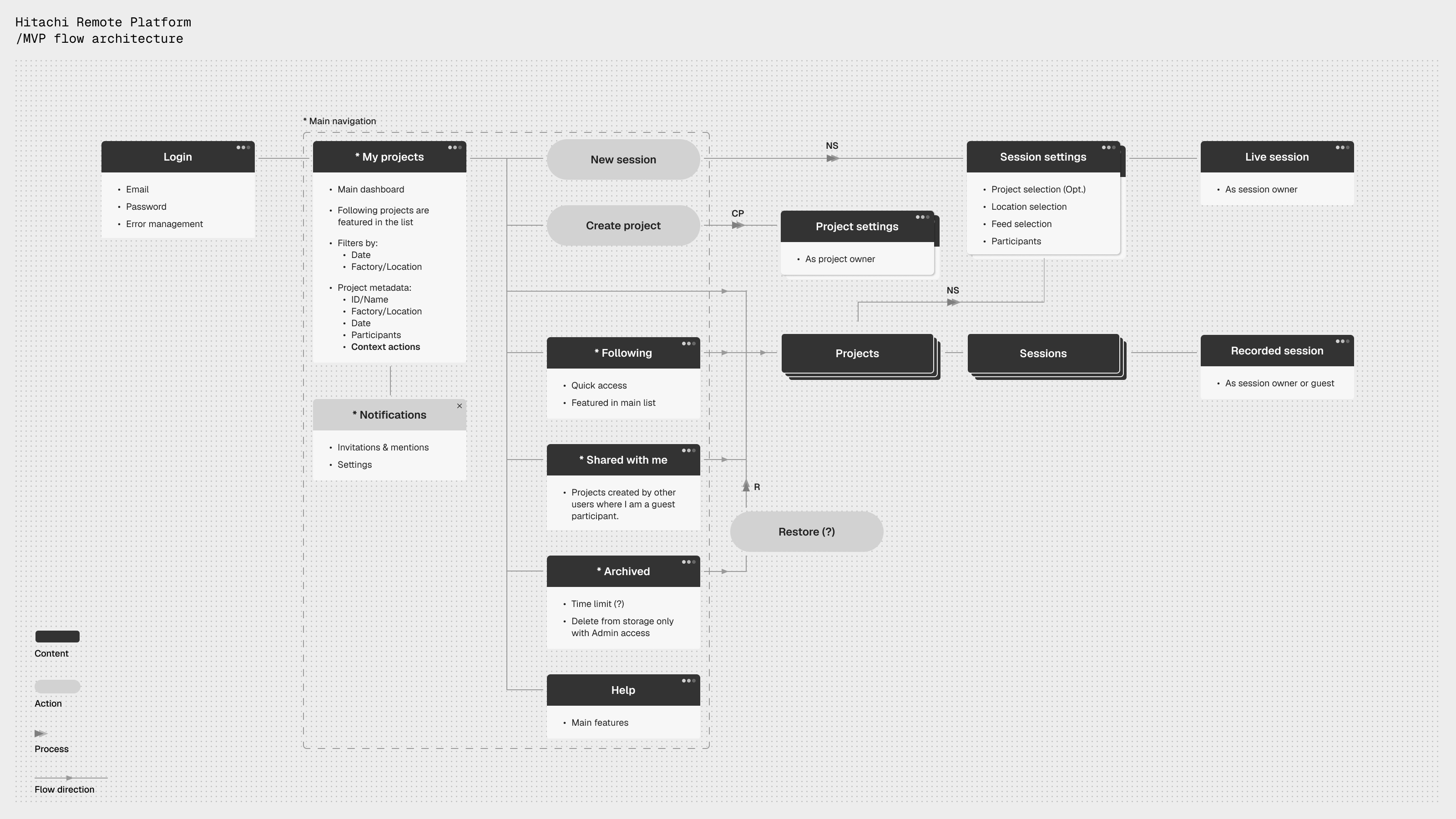
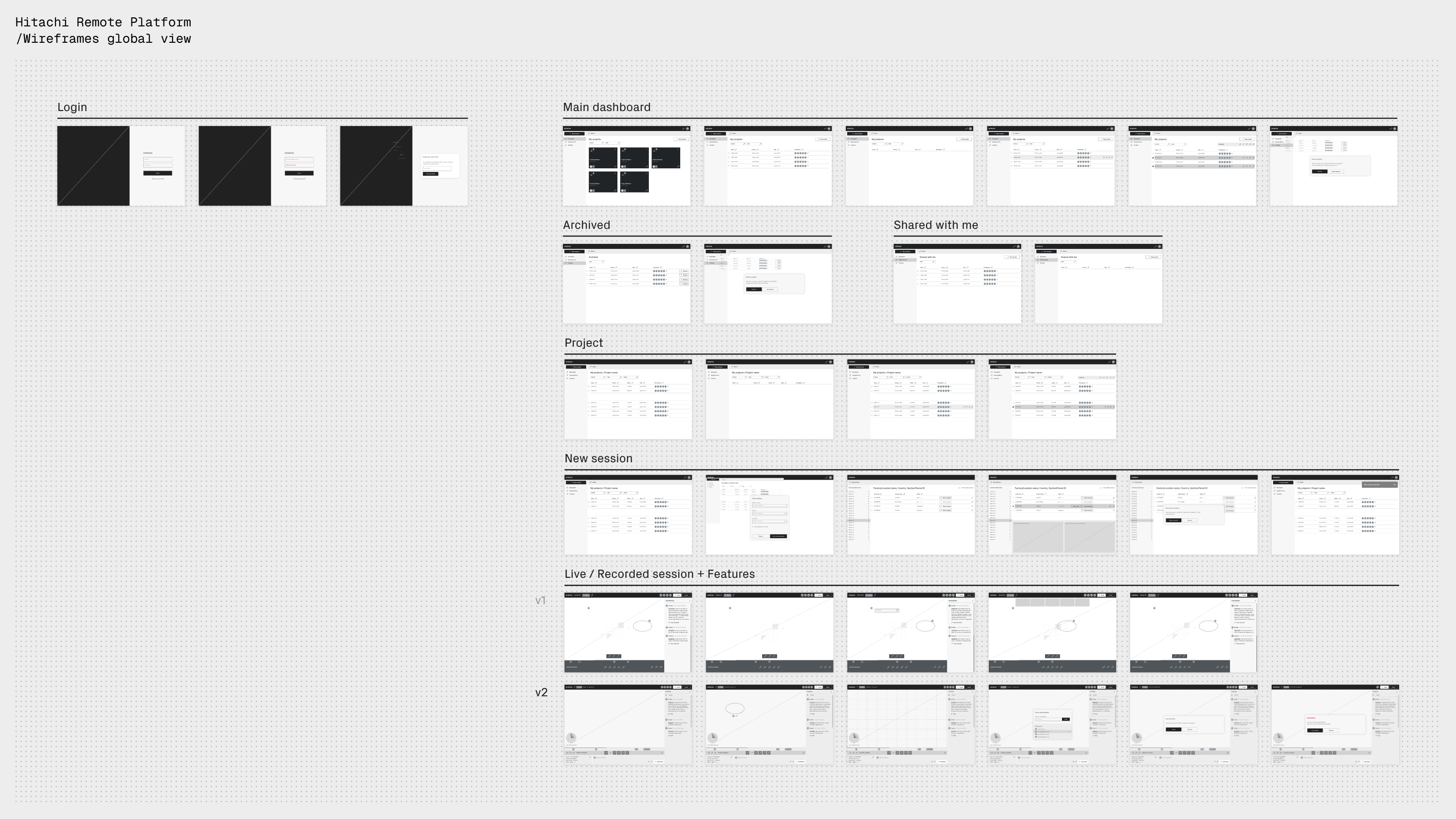
Exploring visual solutions for strategic alignment.
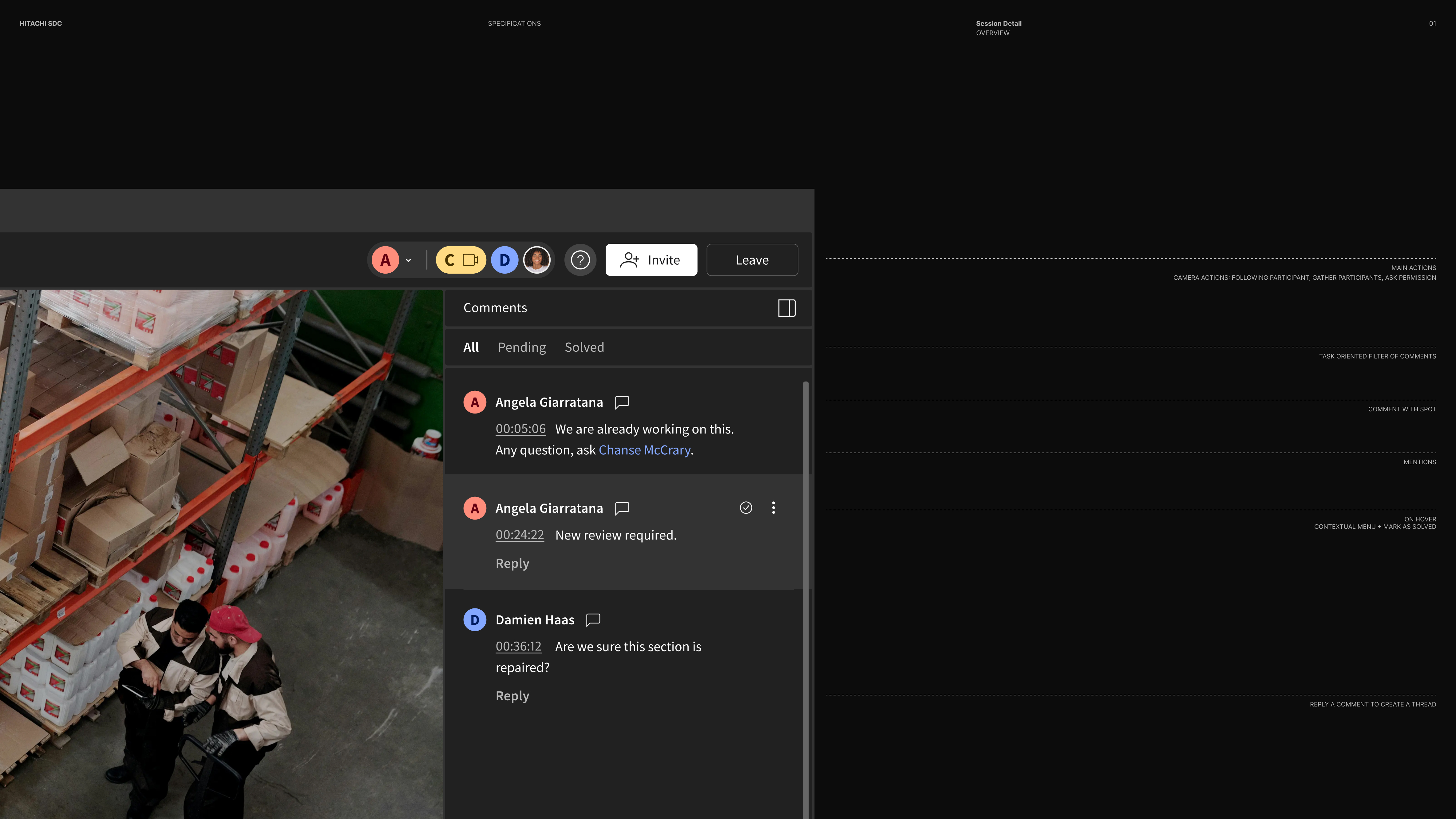
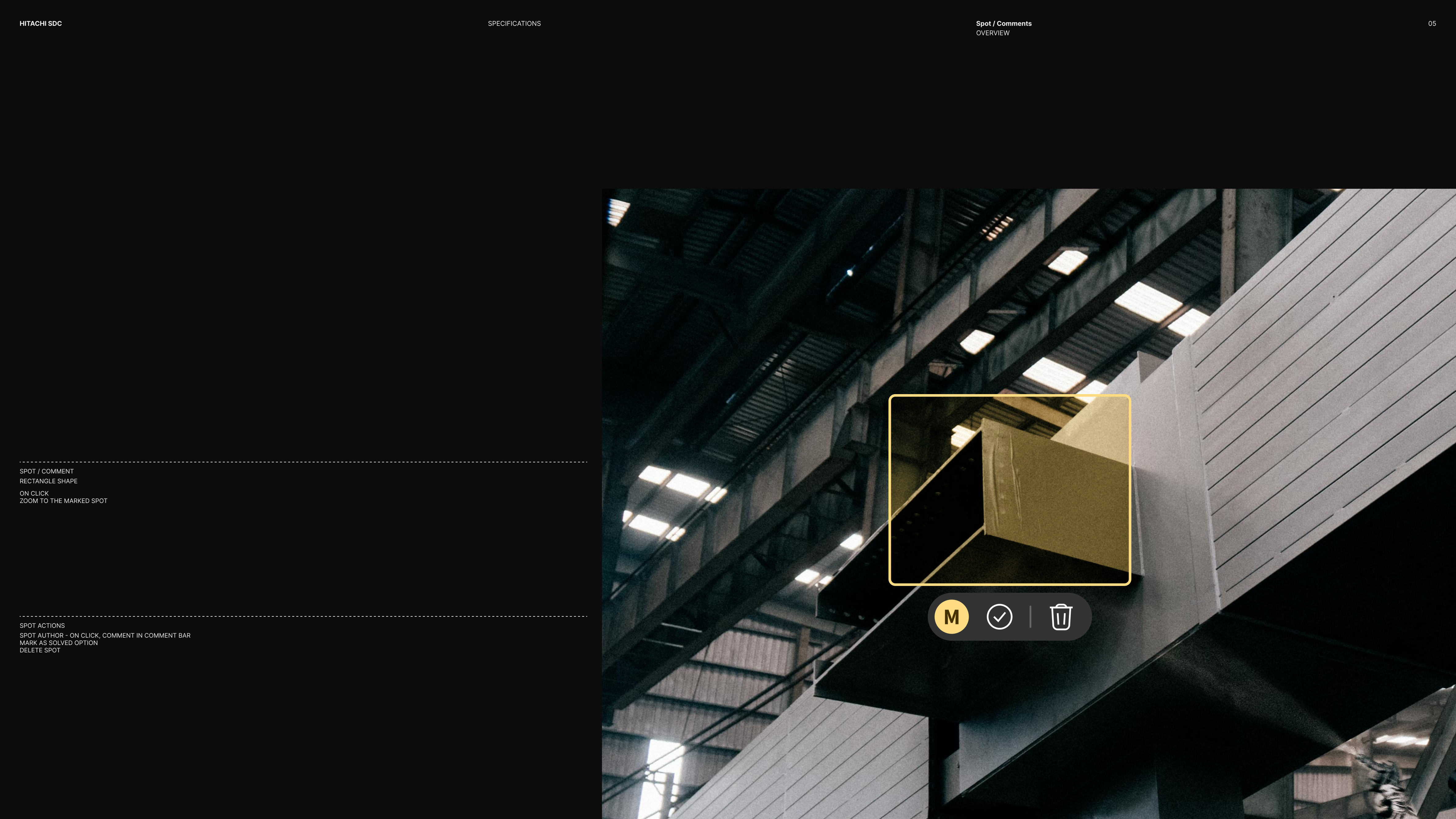
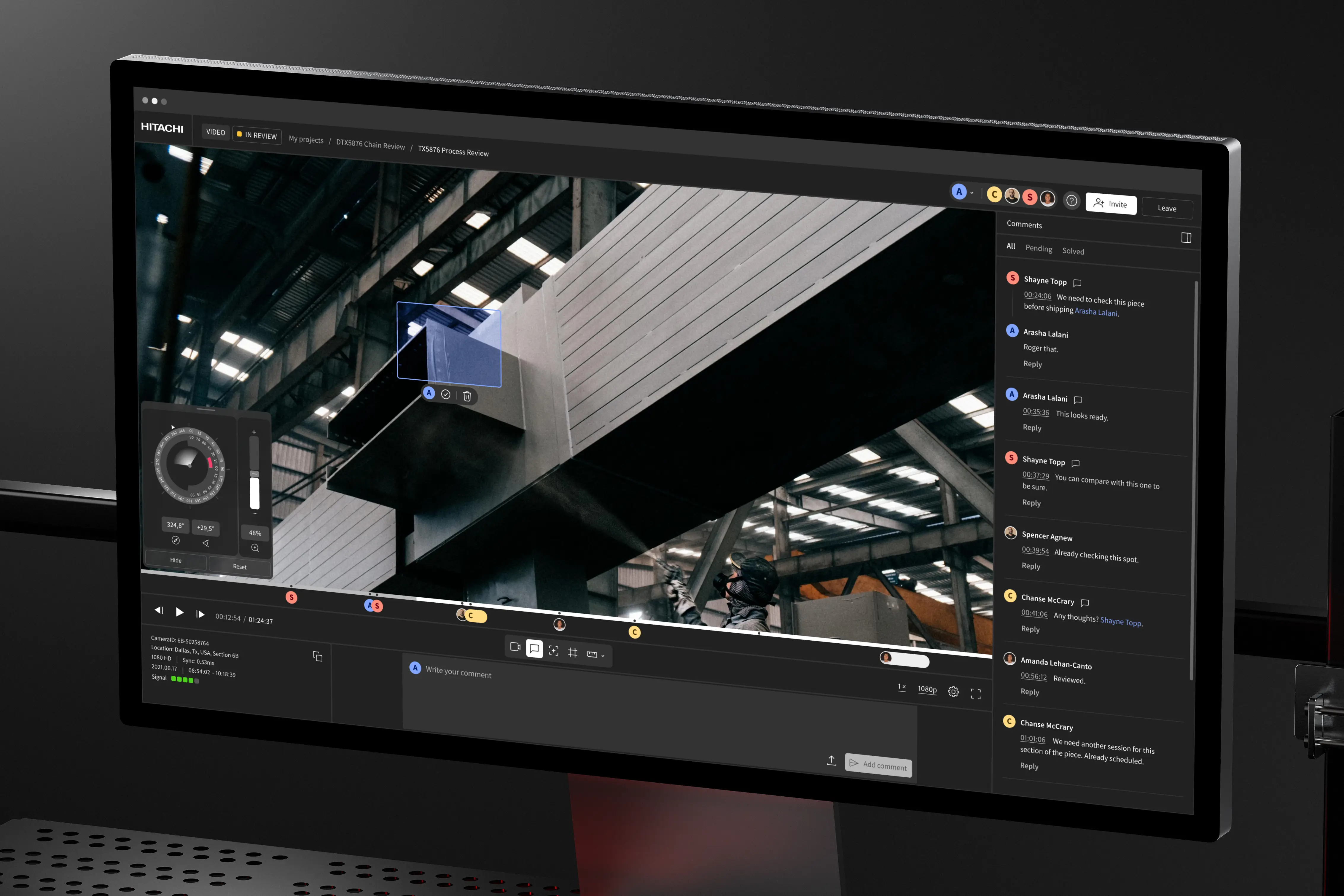
In preparation for a potential MVP derived from the project's conceptual framework, we embarked on a visual design phase that was instrumental in demonstrating to the different teams the platform's capabilities and potential growth trajectories. A comprehensive documentation served as a crucial reference for stakeholders, ensuring a common ground for future iterations.
Drop me a line for more details.
[ Password required ]
